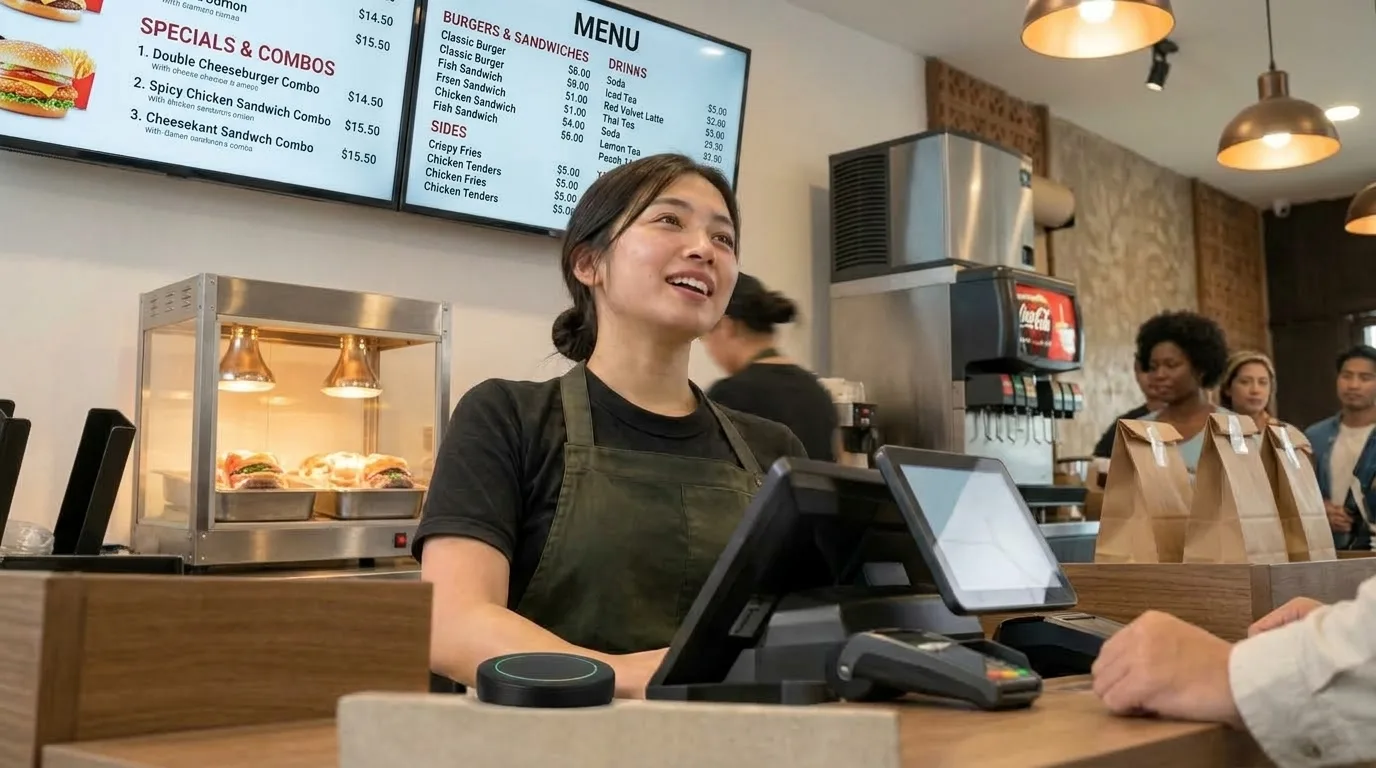
First working day of the month. The message lands in the area managers’ WhatsApp group, same as always.
Store ranking, September
- Flagship, prime mall, Central Bangkok: 118% of target
- Mall outlet, Pathum Thani: 109% of target …
- Mall outlet, Chiang Mai: 86% of target
You know what happens next. Bonuses follow the list. The flagship manager gets the full payout, maybe a shout-out at the town hall. The Chiang Mai manager gets nothing… plus a call from the area manager asking what went wrong.
Here’s the thing, though. Nobody asks what went right.
The flagship sits next to the main escalator of a mall that’s packed every weekend. The Chiang Mai outlet sits on a road where a few thousand people walk past on a good day (and on a rainy Tuesday, fewer than that). One manager inherited a crowd. The other had to earn every single visitor.
The ranking can’t tell them apart. So the bonus can’t either.
Why we pay on sales (and why it made sense)
Let’s be fair to sales targets first. They didn’t come from nowhere.
Sales is the number the business lives on. It comes straight out of the POS, finance trusts it, and a new store manager gets it on day one. Try explaining a weighted scorecard to someone in their first week… you’ll see quickly why sales won.
And nobody’s arguing that store managers shouldn’t care about sales. Of course they should.
The trouble is a quieter belief sitting underneath the scheme, one that rarely gets said out loud: the store that sells the most must be run by the best manager.
That’s where it falls apart. A store’s sales aren’t one number. They’re two things multiplied together, and the manager only controls one of them.
What the manager inherited, times what they actually did

Break a day’s sales into the steps a shopper takes, and the two parts come apart:
Sales = passersby × entry rate × conversion × basket size
The first number comes with the lease. How many people walk past your door depends on the mall, the floor, who your neighbours are, whether it’s payday week. The manager didn’t sign any of that.
The rest is the job. Entry rate is whether the window gives a passerby a reason to step in. Conversion is whether the store is ready when they do. Basket size is what happens at the counter.
It’s a bit like judging two fishermen by the size of their catch, without asking who got the spot at the river mouth.
Here’s how it plays out across two stores of the same brand. The numbers are made up, but if you’ve run a network, you’ll recognise the shape.
This isn’t just a thought experiment
Economists have actually tested it. One team studied thousands of stores at two multibillion-dollar retailers, one in the US and one in the UK, and pulled apart how much of each store’s results came from the store and how much came from the person running it.
The short version? Both matter. The bonus just treats them as one.
The store matters more, which won’t surprise anyone. Fixed things like location, local incomes, and nearby competition explained more of the gap in sales per employee than managers did.
But managers matter a lot, too. They explained 25% to 35% of the variation in store productivity. Swap a 10th-percentile manager for a 90th-percentile one and productivity rose by somewhere between 22% and 82%. That’s not a rounding error. That’s a different store.
Then it gets uncomfortable. The most common pairing in the data was a top manager in a bottom store, or a bottom manager in a top store. Very few top managers ran top stores. Pay, meanwhile, followed the store: better stores paid their managers more, whoever those managers happened to be. And managers who moved tended to move into stronger stores… while the stores, on average, didn’t get better managers. The researchers’ guess is that manager quality is simply hard for companies to see.
Hold that next to the September ranking and it reads differently. Your top manager might be good. Your bottom manager might be the best one you’ve got.
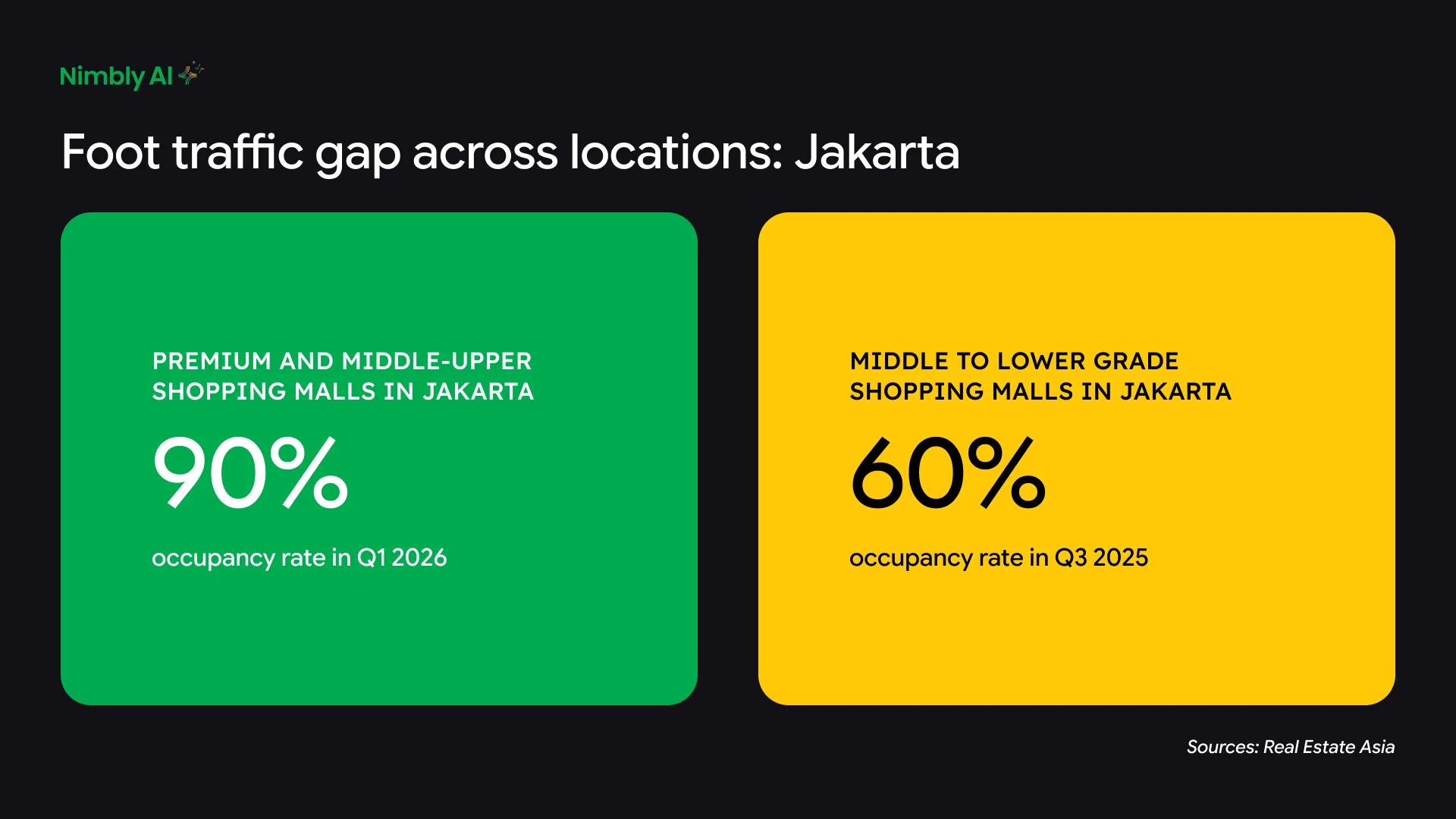
In Jakarta, the gap between locations is wide. Colliers reported premium and middle-upper malls at about 90% occupancy in Q1 2026, against a city average of around 73%. Middle- to lower-grade malls sat at around 60% in Q3 2025. Two outlets of the same brand can live in very different worlds. A single sales target pretends they don’t.
There’s a name for this, by the way. Economists call it pay for luck. A well-known study of CEO pay found that pay moved as much with a lucky dollar, like a jump in oil prices, as with any other dollar, and that better-governed firms paid less for luck. Most store bonus schemes have the same flaw. It’s just sitting one level further down the org chart.
Nobody designed it this way
Here’s what’s strange about all this. Ask any Head of Ops whether location drives sales, and they’ll probably laugh at you. They can name their A-sites without looking. They know.
The bonus ignores it anyway, and not because anyone’s careless. Sales is just the only number they can see for every store. The POS records the receipt. It doesn’t record how many people walked past, how many walked in, or whether the store was running to standard when they did. When the bottom line is all you can see, the bottom line becomes the scorecard.
The cost is quiet, but it adds up. Strong managers at hard sites miss their bonus month after month, and the ambitious ones start asking for a transfer to the mall. (Can you blame them?) Meanwhile, a weaker manager at a prime site hits target in a slow month and learns nothing from it. A scheme built to reward performance ends up rewarding the lease.
Reward what the manager actually controls
A store has the same funnel. Passersby come with the location. Entry rate, conversion, and basket size are the manager’s work. So the fair question at bonus time isn’t “how much did your store sell?” It’s “what did you make of the people who walked past?”
Ask it that way, and the Chiang Mai manager tops the list. Nobody ever asked.
“But we already set a different target for every store”
Fair. Nobody gives the Chiang Mai outlet the flagship’s target. Targets are set per store, usually off last year’s sales, so the location is supposedly baked in already. And running a busy flagship well is a real job, not a free ride.
Both true. Store-level targets beat one number for the whole network by a mile.
But last year’s sales still mix the two things. They take out the level of the location, not the changes in it. A new anchor tenant, a competitor opening one floor up, three months of roadworks outside… each one moves the number of passersby, and the bonus moves right along with it.
There’s a sneakier problem, too. Last year’s sales carry last year’s manager. Lift entry rate and conversion this year, and your reward is a harder target next year. Coast at a prime site, and you inherit an easy one. The baseline quietly punishes the people who improve.
None of this means pulling sales out of the bonus. Sales pays the bills, and HR and finance own the scheme for good reasons. It means putting the manager’s steps next to it, so you can finally tell the two apart.
Rank your stores twice

Start by splitting each store’s sales into its steps: passersby, entry rate, conversion, and basket size, for the same outlets over the same months. The first belongs to the location. The rest belong to the manager.
Then rank your stores twice. Once by sales, the way the bonus does today, and once by the steps a manager controls. The stores that jump around most between the two lists are the managers your scheme is getting wrong. In both directions, by the way. Some of your stars are mostly standing near a good escalator.
If the second list surprises you, don’t rip up the scheme. Run a second scorecard next to it: one region, one quarter, part of the bonus paid on improvement in those steps against each store’s own baseline. Finance and HR get to compare the two before anything changes network-wide, which makes that conversation a lot easier to have.
How Nimbly helps
The hard part is the first step. Most stores can’t count who walks past or who walks in, and few can show whether standards held on a given day. That’s the gap a store funnel fills: passersby and entry rate at the door, standards on the floor, service and upsells at the counter. Nimbly measures each of those, store by store, so the second ranking can exist at all.
The first question doesn’t need a tool, though. At your next bonus review, point at the store at the bottom of the list and ask: how many people walked past it this month, and how many came in?
If nobody knows, you don’t know whether you’re paying for the manager or for the mall.
The ranking will always tell you which store sold the most. It was never built to tell you who ran theirs best.