FMCG brands pay promoters to move units. Units are the part any other lever can buy. What only a promoter can bring back is why shoppers walked away, and most brands never collect it.
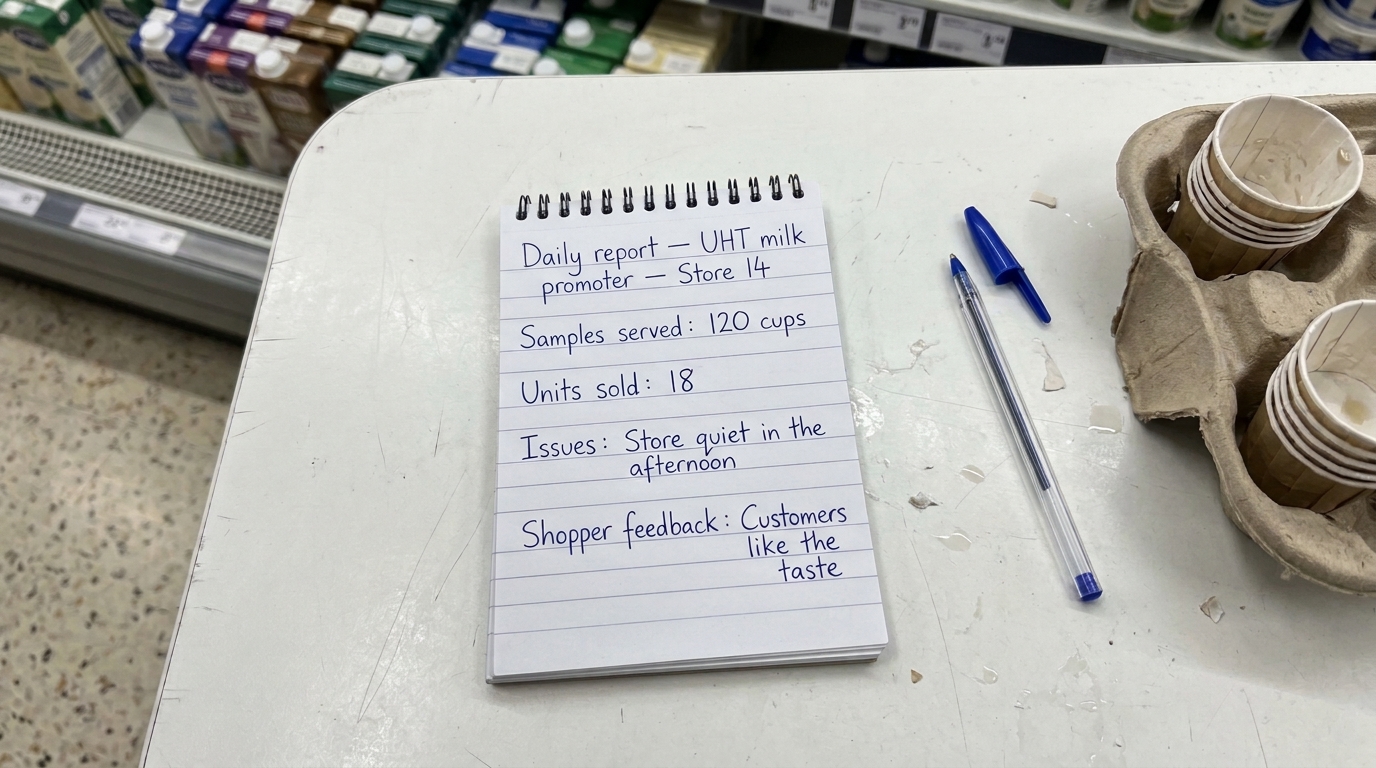
A report like this lands in an area supervisor’s WhatsApp at 21:40, next to forty others that look almost the same. Tomorrow someone copies the 18 into a spreadsheet. Nobody asks about the last line.
That last line is the most expensive line in the report. Over eight hours, the promoter spoke with around a hundred shoppers. One said the one-litre box doesn’t fit her fridge door. Two asked whether the promo covered the strawberry variant. Several pointed at the competitor’s carton on the next facing and said it was cheaper. A dozen said maybe next time and walked on.
All of that became four words: customers like the taste.
A promoter is paid, and judged, on units
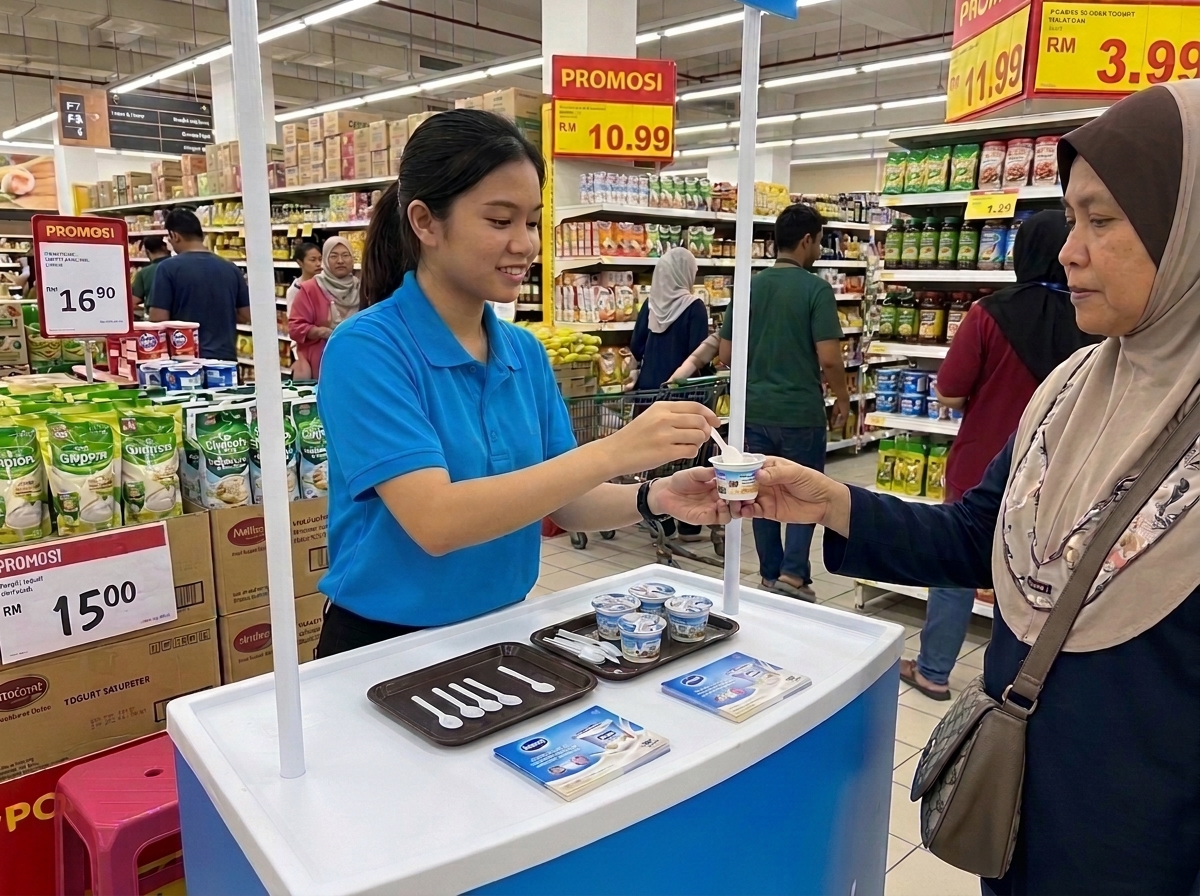
Promoters are one of the most visible investments an FMCG brand makes in modern trade. Milk, cigarettes, cosmetics and food and beverage brands all station them in supermarkets such as Transmart and Superindo.
They are not cheap. Jakarta’s 2026 minimum wage is Rp5,729,876 a month. A brand with 100 promoters in Jakarta spends close to Rp6.9 billion a year on base wages alone, before agency fees, BPJS, incentives and sampling stock.
In-store promoters are typically paid a monthly base plus commission on sales. So brands judge them the way they pay them: units sold, per store, per day.
The old belief: promoters are there to sell
The belief has real evidence behind it. A study in the Journal of Retailing of store-level scanner data found that in-store sampling lifts sales both immediately and over the following weeks. The same researchers found its effect was much larger than end-of-aisle displays. Nobody serious should argue that a promoter sells nothing.
The trouble is what the sale is worth once you look closely.
- Part of it isn’t yours. The researchers found that one brand’s sampling raised sales for every brand in the category. Your promoter grows the shelf, and your competitor collects some of it.
- The economics are thin for low-ticket products. In the categories they studied, a sampling event stopped being profitable once its cost passed about 15 times the product’s unit price. A Jakarta promoter’s base wage alone is roughly Rp230,000 per working day. For a Rp10,000 product, that is 23 times the unit price before stock and agency fees.
- Selling is the part other levers can do. Shelf facings, price, displays, retailer catalogues and advertising all move units, and most of them work in every store without a person in each aisle. Eye-tracking research shows that simply adding shelf facings strongly raises the chance a brand is noticed and considered.
So the promoter’s sale is real, but it is small per head, partly shared with competitors and replaceable. The one thing no other lever replaces is what the promoter hears.
The only listener at the moment of choice
A brand already has many ways to hear its shoppers. Each one misses something the promoter catches.
| Source | Who it hears | When | What it misses |
|---|---|---|---|
| Sell-out and scan data | Buyers | After the sale | Why anyone didn’t buy |
| Reviews and social listening | Buyers and vocal users | Days later, online | The quiet majority, and the shelf |
| Consumer research and FGDs | Recruited respondents | Weeks later, in a room | What people actually do in the aisle |
| The promoter | Anyone who stops, including non-buyers | At the shelf, next to the competitor | Nothing, if someone records it |
The promoter is the only listener who hears the non-buyer, in the moment of choice, in the shopper’s own words, with the competitor one facing away. That is exactly the shopper a brand most needs to understand and is least able to reach.
Think about what a hundred conversations a day contain. Pack sizes that don’t fit how people store or carry them. Promo mechanics shoppers misread. Variants they asked for and couldn’t find. Claims on the pack they don’t believe. A competitor’s price per millilitre, compared out loud.
Brands pay research agencies to find these things months later. Their promoters heard them this week.
This is the shift. A promoter isn’t a sales channel with feedback attached. She is a research instrument that also sells.
Why the feedback never arrives, and why it isn’t about attitude
It is tempting to say promoters don’t take feedback seriously. Usually the system has taught them not to.
- They are paid on units. Commission rewards the sale. A long conversation with a shopper who doesn’t buy earns nothing and costs time.
- The report asks for a number and a sentence. A free-text box at the end of a shift compresses a hundred conversations into customers like it. That is not laziness; it is what the form asks for.
- Nobody reads the sentence. The supervisor totals the units. The brand manager sees a sell-out dashboard. Forty WhatsApp messages of free text are not data anyone can count.
- Nothing comes back. A promoter who reports that shoppers keep asking for a smaller pack never hears what happened next. After a few weeks, she stops writing it down.
So the brand team commissions a study to find out why the new variant is underperforming, while the answer was spoken out loud in a hundred aisles last month.
Make the conversation the record
The fix is not a longer report form. It is to stop asking the promoter to summarise, and keep the conversation itself as the record.
That is what conversation intelligence such as Nimbly Echo does. A promoter wears a small device on shift, and Echo turns the conversations on the shop floor into structured data: what shoppers asked, what objections they raised, which competitors they named, what the promoter said back, and whether the shopper bought.
Once the conversation is data, the questions change:
- From anecdote to count. Not “some shoppers think it’s expensive”, but how many mentioned price against the competitor this week, in which stores.
- From buyers to non-buyers. The reasons people walked away become as visible as the units sold.
- From script to proof. You can see whether the campaign message was actually said, and how shoppers reacted to it.
- From average to best. You can hear what your top promoters say differently, and coach the rest towards it.
Start with one line of the report
The first step needs no tool at all.
- Replace “shopper feedback” with three questions. What did the last three shoppers who didn’t buy say? Which competitor was mentioned? What did a shopper ask that you couldn’t answer?
- Pay for listening, not only selling. Add a small incentive for useful feedback next to the sales commission.
- Have someone read it and reply. Tell promoters what changed because of what they reported. Feedback that disappears stops coming.
- Add one metric next to units. How many shopper insights per promoter reached the brand team this month?
Next week, ask your field team what the last ten non-buyers said at your shelf. If nobody knows, that is your answer.
Your promoters talked to thousands of shoppers this month. The question is whether your brand heard any of them.