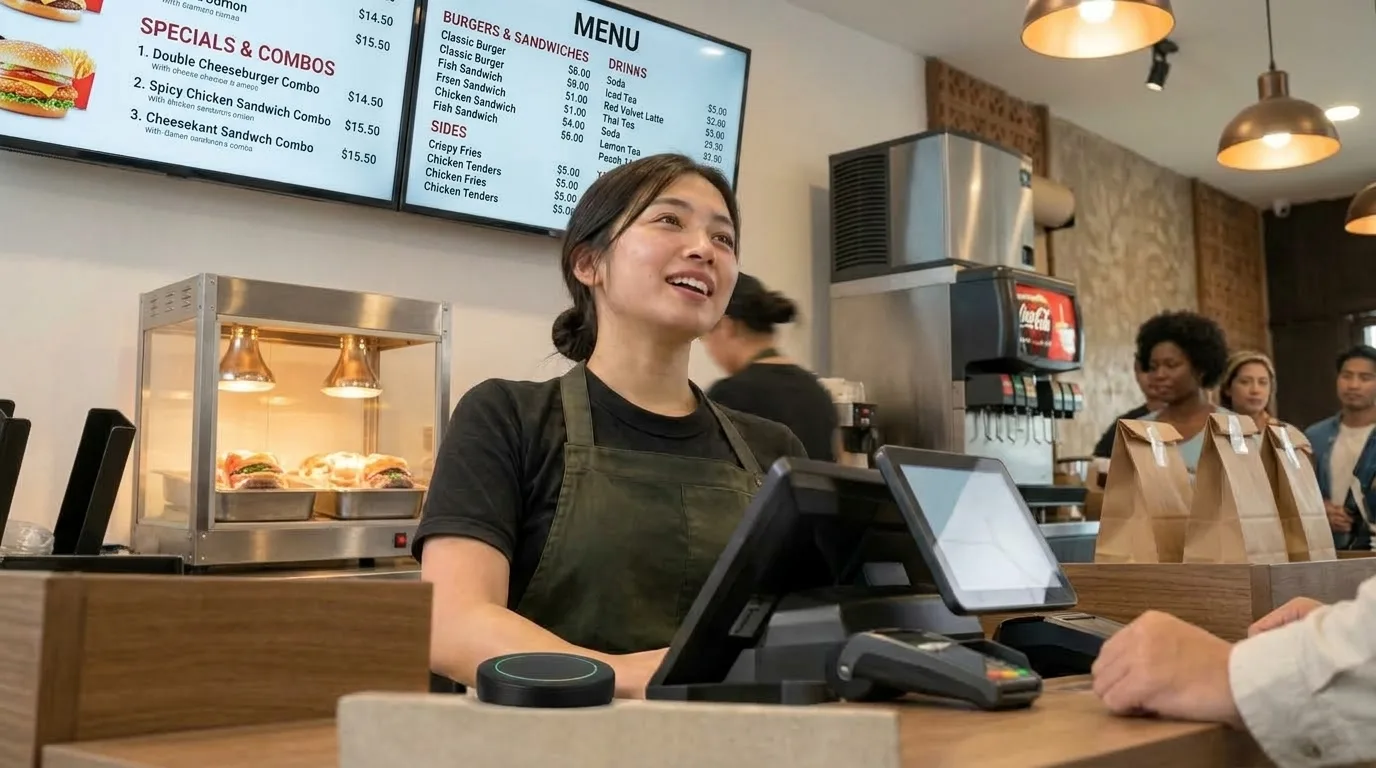
3 p.m. at a fried-chicken outlet, and there’s nobody in line. The cashier has time to ask everyone the line from last month’s training: “Make it a combo with a drink?”
At 12:15, the queue’s out the door. She asks nobody.
She hasn’t forgotten it. She’s just busy. If you’ve ever worked a lunch rush, you know the feeling… your hands are doing three things at once, and your mouth only has time for “next, please.”
Why we reach for training
When upsell numbers dip, most chains do the sensible thing. Run a refresher. Or they tweak the script, and if there’s time, add a role-play to the next briefing. Sales go up for a week or two. Then they’re back where they started.
And for a week or two, it works. Then the number quietly slides back to where it was.
Here’s the thing, though. Ask almost any cashier what goes with a two-piece meal and they’ll tell you before you’ve finished the question. They know the line. They’ve always known the line.
What changes is what happens to it when ten people are waiting.
The receipt can’t hear the question
A sale where the cashier offered the combo and the customer said no looks exactly like a sale where nobody asked. Same receipt. Same total. The POS remembers what was bought, but it has no idea what was said.
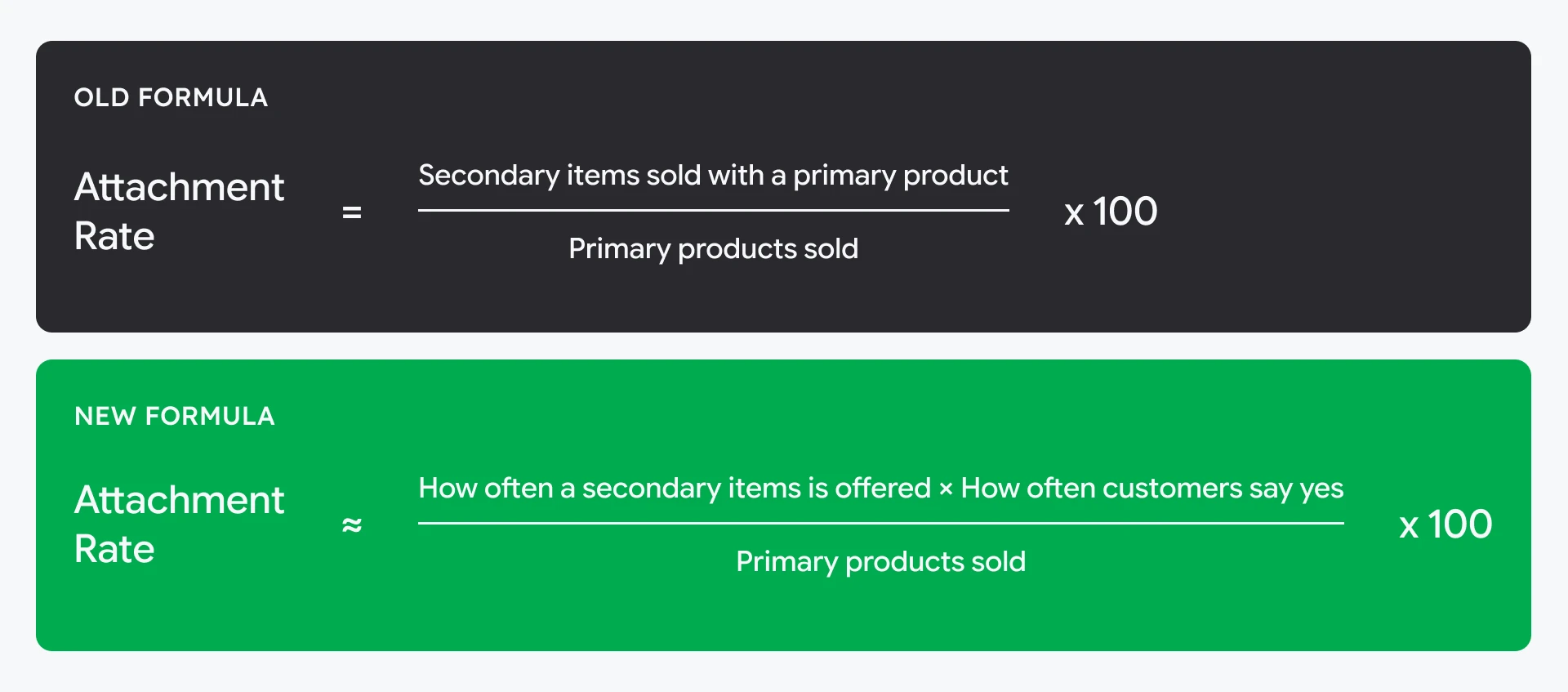
So HQ ends up staring at one number, the attach rate: the share of transactions that include an add-on. Set aside the customers who add something on their own (there are always a few), and what’s left is really two numbers wearing one coat:
Attach rate ≈ how often the offer is made × how often customers say yes
If people keep saying no, look at the offer. Maybe the add-on doesn’t go with the meal, or the combo price isn’t worth it.
If nobody’s making the offer, it’s one of two things: training or habit.
- A training problem means the cashier doesn’t know what to offer or how to say it. It shows up at every hour, quiet or busy.
- A habit problem means the cashier knows the line and uses it at 3 p.m., then drops it when the queue builds. It shows up at peak.
Most stores have the habit problem, and training doesn’t help much with that one. When you’re busy, you fall back on habit. So the offer holds up at 3 p.m. and drops off at 12:15.
One in two says yes
Here’s what tends to surprise operators. Across our QSR customers in Indonesia, 40–50% of customers say yes when they’re offered the upsell. Roughly one in two. The line works. Customers aren’t the problem. The offer is.
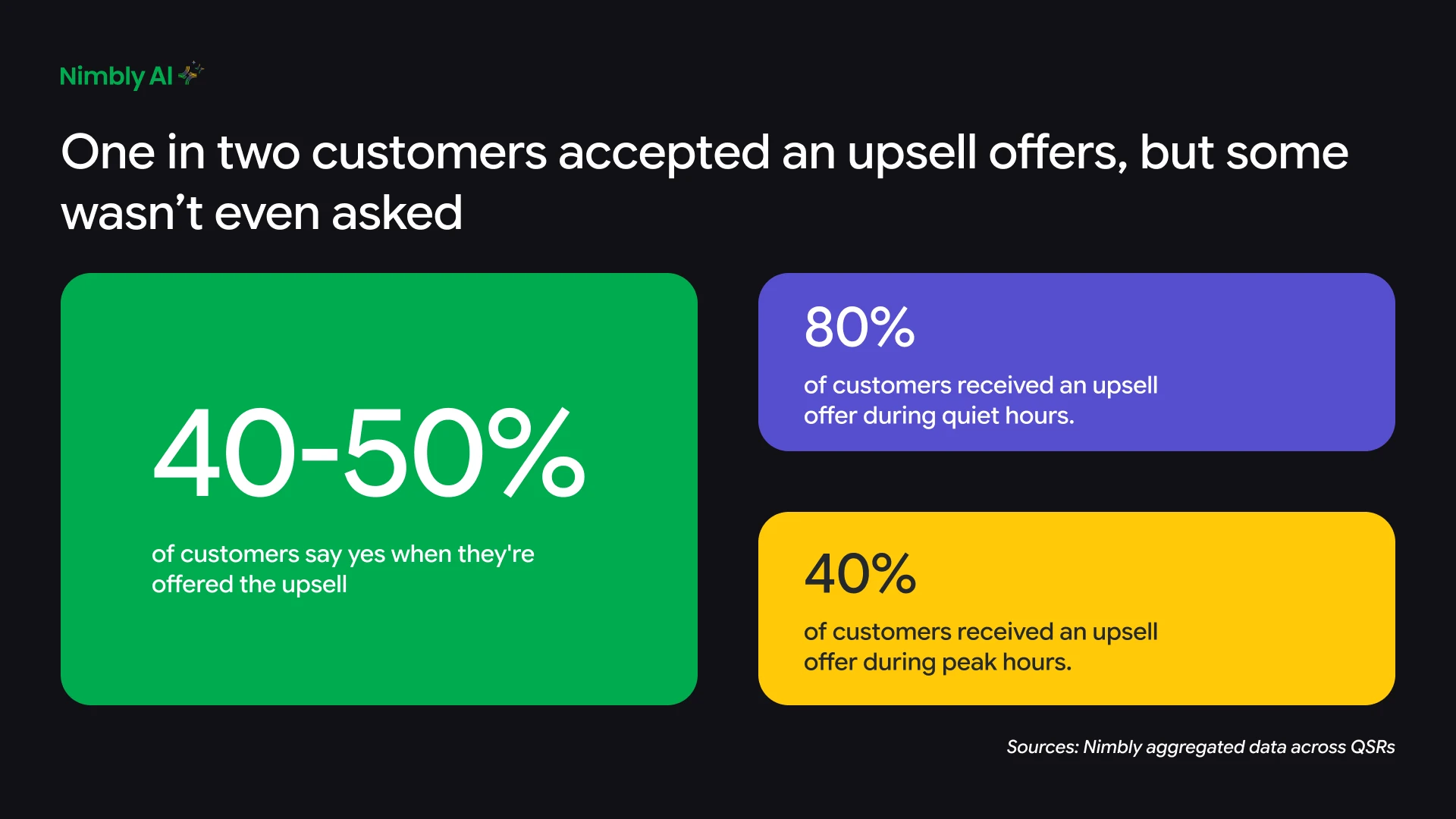
In those same outlets, the offer is made to 80% of customers in quiet hours and just under 40% at peak… which is, awkwardly, exactly when the most people are standing at the counter.
Here’s a rough calculation. Say an outlet does 300 transactions a day, and each accepted upsell adds about Rp5,000. If cashiers go from offering 30% of the time to 80%, and 45% of customers still say yes, that’s about Rp337,500 more a day, or roughly Rp10 million a month. For a chain with 100 outlets, it comes to around Rp1 billion a month.
No new store. No new menu. Just a question that was already in the script, asked at 12:15.
“So training is useless?”
New staff still need training. They have to learn what to offer and how to say it naturally.
But training once a quarter and expecting a habit is a bit like buying a gym membership in January and expecting to be fit by March. The membership isn’t the workout.
The research backs this up. A review of skill-decay studies found that skills last when they’re used often, and last longest when training looks like the real job. And a role-play in a quiet back room looks nothing like a counter at 12:15. In one survey of training professionals, about 70% of trainees were reported to struggle to apply what they’d learned within a year.
Robert and Elizabeth Bjork, two psychologists who study memory, explain it like this: every memory has two strengths. One is how well you learned something, and that one barely fades. The other is how easily you can recall it right now. That one drops when you stop using it, and it depends on where you are. It’s why you can forget a colleague’s name when you run into them at the mall. Training builds the first kind. Using the line at the counter on busy shifts is what keeps the second one up.
So the cashier at 12:15 hasn’t forgotten the line. She just can’t reach it fast enough.
Which means when the offer drops at peak, you can fix the people, the system, or better, both. For the people, that’s sharper training plus a habit the team practises every shift. For the system, it’s a shorter line to say, an extra pair of hands at lunch, or a prompt on the POS screen. Either way, you only know where to start once you can see when the offer stops.
Measure the habit, not the knowledge
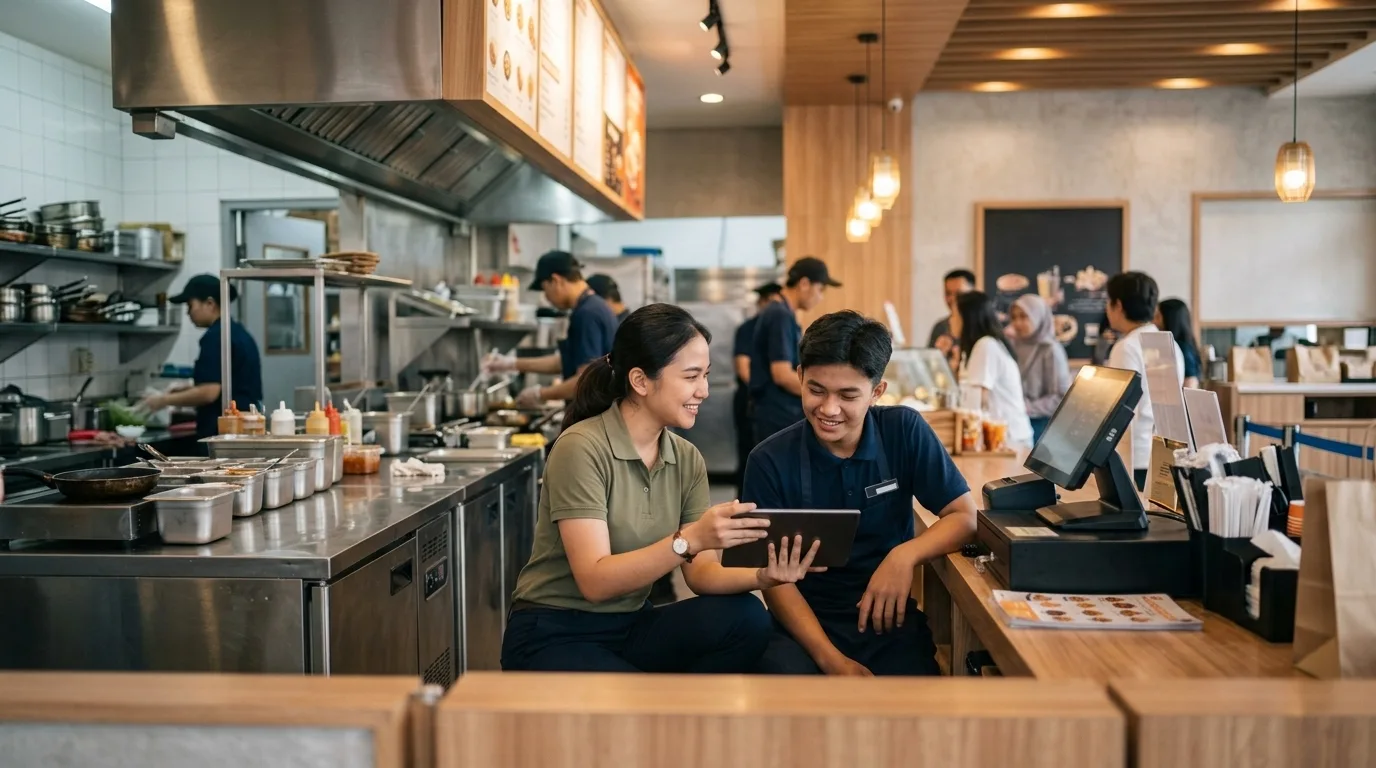
A habit forms when you do the same thing in response to the same cue, again and again, and find out quickly how it went. At the counter, the cue is a customer stepping up. The action is the offer. The feedback is knowing whether she actually made it, which is the part most stores never give her.
“Enough times” is a lot, by the way. In a well-known study of everyday habits, it took a median of 66 days of daily repetition before a new behaviour felt automatic. Sixty-six days. Not one workshop.
That’s why an area manager’s visit, however good, can’t build the habit on its own. A visit refreshes knowledge. The manager reminds everyone of the line, maybe shows how it’s done, and the team is sharp while they’re in the store. Then the manager leaves, and the next few thousand transactions happen with no feedback at all. A habit needs feedback every shift, not every month. The visit is a reminder. The number is the coach.
Upselling isn’t a knowledge gap you train away. It’s a habit you build at the counter, and you can only build what you can see. A few places to start:
- Split the attach rate. Before booking the next training, find out whether the offer isn’t being made or isn’t being accepted. They need different fixes.
- Look by the hour. A daily average hides the lunch rush. The hours with the longest queues are where the money is.
- Give the team the number. Share each outlet’s offer rate every week, and celebrate the shifts that hold it at peak. Teams improve what they can see.
Think about it this way. Online, nobody would put up with a checkout page that shows the add-on to some customers and not others, with no way of knowing which. At the counter, it happens every lunchtime.
Your next training session won’t fix the rush hour. Seeing it will.
How Nimbly Echo helps
Nimbly Echo records every conversation at the counter and turns each one into a simple answer: was the offer made, and did the customer say yes?
From there, you see the offer rate and acceptance rate for every outlet, hour by hour, and each team gets its own number to build the habit against.